

Kitchen Trends & Tips by Miramont Cabinetry
Frameless Cabinets in Peachtree Corners, GA: The Complete Guide to European Full-Access Cabinetry
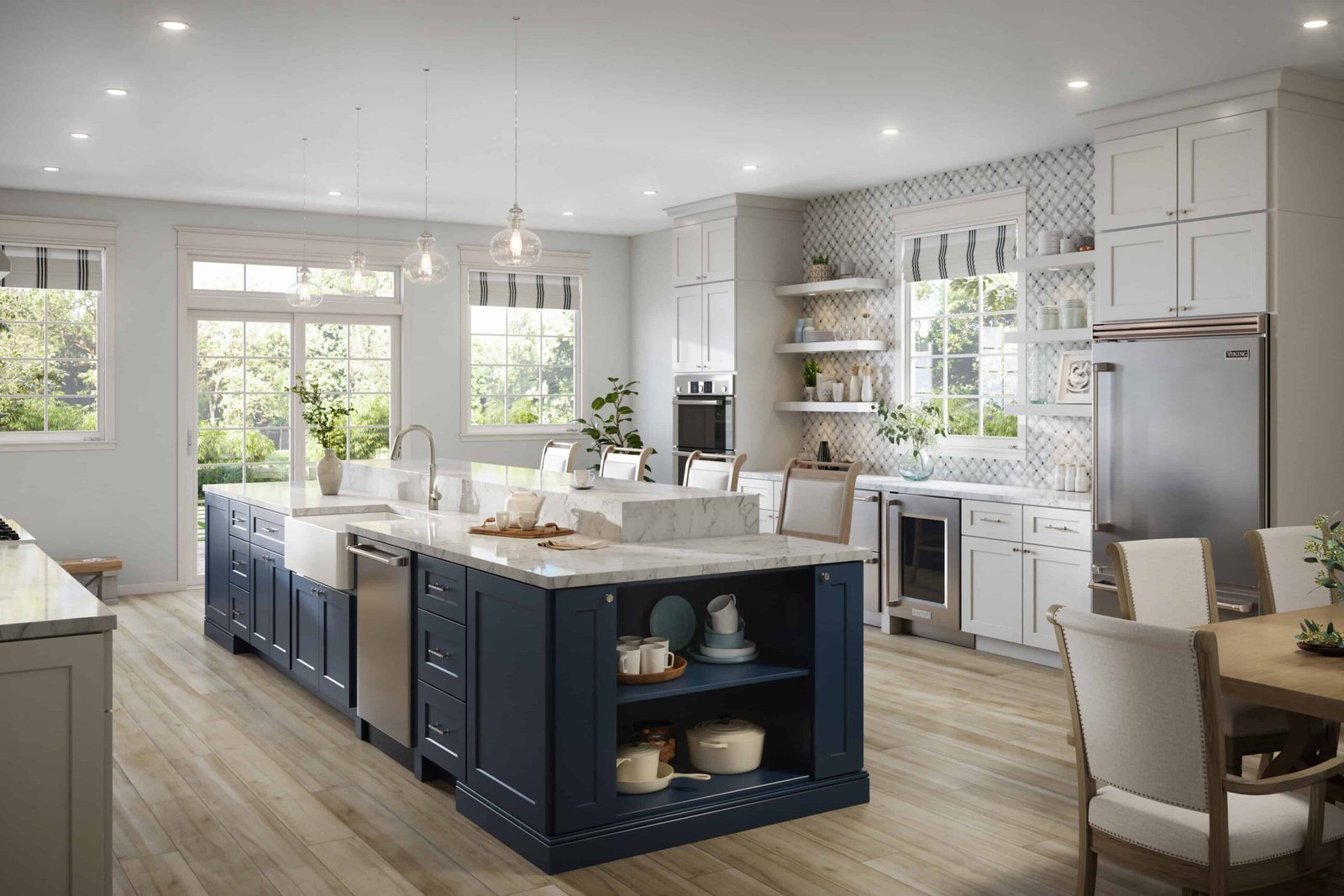
If you’ve spent any time researching kitchen or bathroom cabinetry, you’ve likely encountered the term frameless cabinets — and wondered exactly what it means, whether it’s right for your home, and where you can find them in the Peachtree Corners area. The answer to all three questions deserves a thorough explanation, because frameless cabinets represent a fundamentally different approach to cabinet engineering, one that has dominated European manufacturing for decades and is now becoming the preferred specification for Atlanta-area homeowners who prioritize storage efficiency, modern aesthetics, and long-term hardware performance.
Frameless cabinets — also called European-style cabinets or full-access cabinets — eliminate the center face frame that defines traditional American cabinet construction. In a framed cabinet, a solid hardwood frame is glued and stapled to the front of the cabinet box. Doors hinge onto this frame. The frame provides structural support but reduces the interior opening width by approximately 1.5 inches on each side, limiting how large a drawer or pullout shelf can be and creating the characteristic ‘shadow line’ look of American traditional kitchens. In frameless construction, the cabinet box itself carries all structural responsibility. Doors and drawer fronts attach directly to the box sidewalls using concealed European hinges, achieving a full-overlay appearance where virtually no cabinet box is visible from the front. The interior is fully accessible from edge to edge, allowing significantly wider drawers, larger rollout trays, and better utilization of every cubic inch of cabinet space.
At Miramont Cabinetry on Peachtree Industrial Blvd in Peachtree Corners, GA, frameless cabinetry is our core specialty. We supply KCMA-certified frameless cabinet systems equipped with Blum hardware, Gola Channel integration options, and Nobilia kitchen configurations — backed by complimentary 3D VR design consultations and approximately three-week delivery timelines that the Atlanta custom cabinet market simply cannot match. Whether you’re planning a complete kitchen renovation, a master bathroom upgrade, or a custom built-in project, this guide covers everything you need to know about frameless cabinets before making your investment.
Key Takeaways
- Frameless cabinets eliminate the center face frame, giving you 15–20% more usable interior storage than American framed systems
- European frameless construction uses concealed Blum hinges and full-extension drawer systems for superior performance and modern aesthetics
- KCMA certification is the quality benchmark you should require from any frameless cabinet supplier in Peachtree Corners, GA
- Gola Channel handleless systems, Blum LEGRABOX drawers, and Nobilia kitchen configurations are all available at Miramont Cabinetry
- Miramont delivers custom frameless cabinets in approximately three weeks — significantly faster than standard custom cabinet lead times of 8–14 weeks
- Frameless cabinets hold resale value better than traditional framed systems in Peachtree Corners’ contemporary home market
What Are Frameless Cabinets? Construction Explained
The term ‘frameless’ tells only half the story. To fully understand what makes frameless cabinets special, you need to understand what they replace and why European cabinetmakers developed this system in the first place. Traditional American cabinet construction — developed in the post-war era and still dominant in most big-box and mid-market cabinet lines — attaches a solid hardwood face frame to the front of the cabinet box. This frame serves structural purposes: it adds rigidity to the plywood or particleboard box, provides a mounting surface for hinges, and creates the characteristic look of classic American cabinetry with its visible wood framing around each door opening.
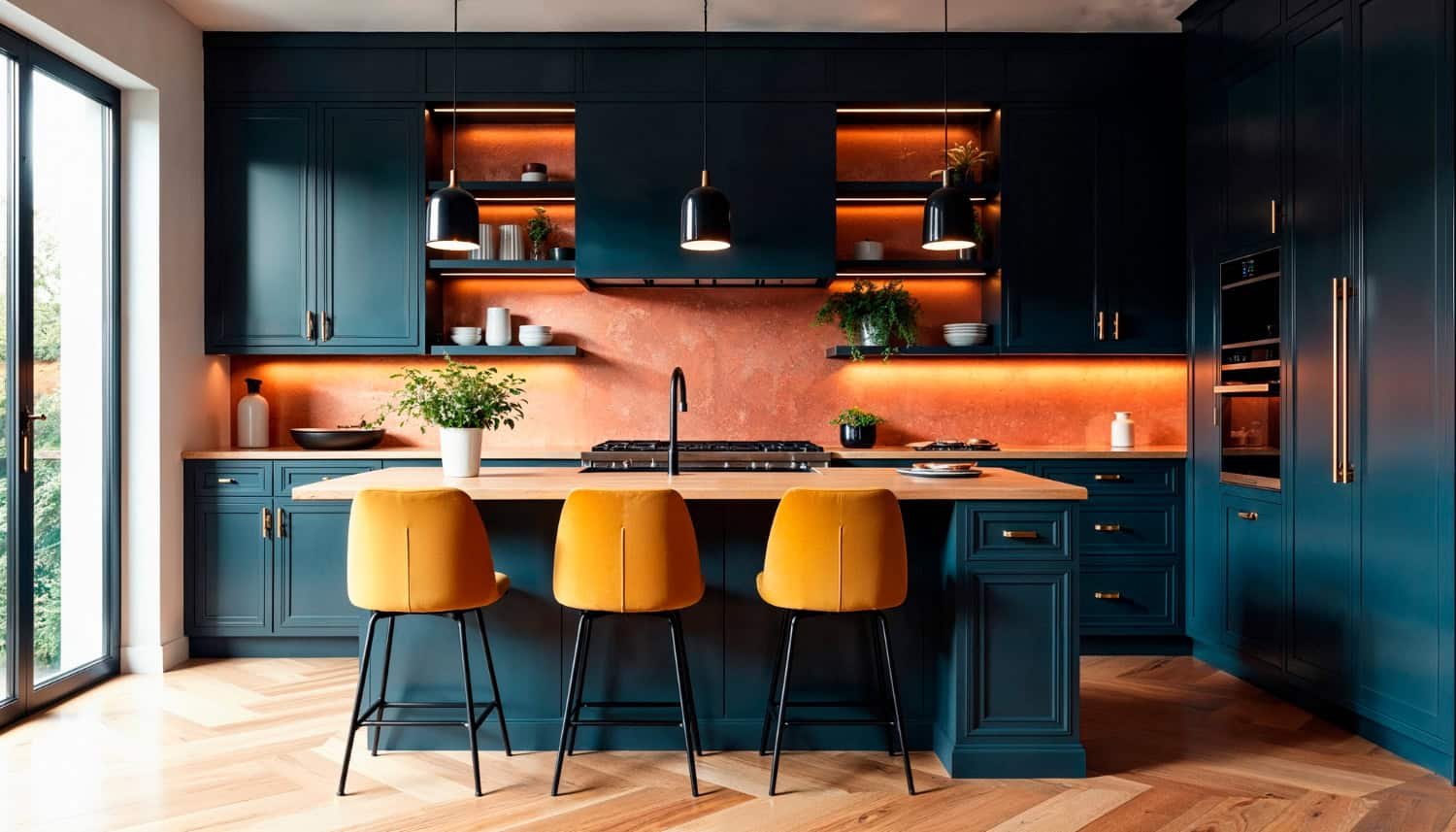
European manufacturers, working in the context of modernist design principles and a postwar emphasis on manufacturing efficiency, developed a different approach. They built the structural integrity directly into the cabinet box itself — using thicker, higher-density panels (typically 19mm or 3/4 inch) and precision-drilled sidewalls that could accept hinges, drawer slides, and shelf pins without a secondary frame. The result was a cleaner box: all four sides equally flush, all four corners perfectly square, with doors and drawers mounting directly to the box interior and covering the entire cabinet face when closed.
This construction method is sometimes called ‘full-access’ construction because the interior of the cabinet is genuinely fully accessible from edge to edge. When you open a drawer in a frameless cabinet, the drawer can be sized to the full interior width of the box — rather than the narrowed opening imposed by a face frame. This single difference results in 15–20% more usable storage capacity across a full kitchen’s worth of cabinets — a meaningful advantage in any kitchen where storage is a priority.
The system’s precision is maintained through a production standard called System 32 — a grid of precisely spaced 5mm holes drilled on the interior sidewalls of every European frameless cabinet. These holes serve as mounting points for hinges, drawer slides, shelf pins, and interior accessories, all positioned with perfect interchangeability and dimensional accuracy. Miramont Cabinetry‘s entire frameless cabinet line uses this System 32 standard, ensuring that every component fits perfectly and every future modification or addition aligns seamlessly.
Frameless vs. Framed Cabinets: Full Side-by-Side Comparison
Understanding the practical differences between frameless and framed cabinets helps clarify which system is right for your Peachtree Corners home. The table below covers the most important dimensions of comparison:
| Feature | Frameless Cabinets | Framed Cabinets |
| Interior access width | Full-width — no obstruction | Reduced by ~1.5″ per face frame |
| Storage efficiency | +15–20% more usable space | Standard capacity |
| Aesthetic style | Modern, European, minimalist | Traditional, classic American |
| Door overlay | Full overlay — seamless look | Partial or full overlay |
| Hinge type | Concealed European (Blum, Hettich) | Exposed or semi-concealed |
| Drawer sizing | Full interior width | Limited by frame opening |
| Construction origin | German / European standard | American standard |
| Face frame material | None — box is the structure | Solid hardwood frame |
| Gap line consistency | Precise, consistent reveal | Variable depending on frame quality |
| Installation tolerance | Requires precision leveling | More forgiving |
| Best aesthetic for | Modern, contemporary, transitional | Traditional, farmhouse, colonial |
| Resale appeal | Strong in contemporary markets | Strong in traditional markets |
| Hardware compatibility | Blum, Hettich, Grass systems | Most hardware brands |
| Price range (custom) | $$–$$$ | $–$$$ |
Why Frameless Cabinets Are Gaining Ground in Peachtree Corners
Peachtree Corners has evolved considerably over the past decade. What was once a predominantly suburban community with traditional design preferences has become one of Atlanta’s most design-forward residential markets — driven by an influx of technology industry professionals, younger buyers with contemporary tastes, and established homeowners who are investing in renovation projects that reflect current design standards rather than maintaining the status quo.
In this context, frameless cabinets have gained significant ground. The clean horizontal lines of full-overlay frameless cabinetry align with the open-plan living spaces common in Peachtree Corners new construction and with the renovation priorities of homeowners updating older homes. The storage efficiency advantage is particularly valued: Peachtree Corners kitchens — often in homes built in the 1990s and early 2000s — frequently have layouts that benefit enormously from the extra capacity that frameless construction delivers.
Beyond aesthetics and storage, Peachtree Corners homeowners are sophisticated buyers who understand that hardware quality — specifically Blum hinges and drawer systems — translates directly into decades of trouble-free use. The soft-close dampening of Blum’s CLIP top BLUMOTION hinge system, the smooth glide of LEGRABOX drawer systems, and the adjustability of concealed European hardware all add up to a daily kitchen experience that is quantifiably better than what budget framed systems provide. When Miramont Cabinetry conducts design consultations with Peachtree Corners clients, the most common feedback after installation is that the hardware feel alone justifies the investment.
There is also the resale dimension. In a Peachtree Corners market where buyers are comparing multiple renovation-level homes, European frameless cabinetry signals quality in a way that traditional framed systems — regardless of their individual quality level — simply do not. Real estate professionals in Gwinnett County consistently report that homes with European frameless kitchens generate faster offers and stronger pricing than equivalent homes with standard American cabinet systems.
The Engineering Behind Frameless Cabinet Quality
Box Panel Quality: HDP vs. Plywood
The foundation of any frameless cabinet is the box panel. European manufacturers like Nobilia use high-density particleboard (HDP) engineered specifically for cabinet box applications — with screw-holding strength, moisture resistance, and dimensional stability that exceeds the cheap particleboard used in budget cabinet lines. Premium American custom manufacturers use 3/4-inch plywood, which adds weight but delivers excellent screw-holding and delamination resistance in high-moisture environments. At Miramont Cabinetry, we specify panels that meet European manufacturing standards — no thin backs, no short-cut corner joints.
Edge Banding: The Moisture Seal
Every cut edge of a frameless cabinet box panel must be sealed with edge banding. The difference between cheap melamine edge tape (which lifts, yellows, and allows moisture penetration) and laser-bonded ABS edge banding (which is molecularly fused to the panel edge with no glue line) is a 20-year difference in cabinet lifespan. Nobilia’s production line uses laser edge bonding on all exposed panel edges — the same technology Miramont Cabinetry specifies for our Atlanta-area frameless cabinet projects.
Back Panel Construction
A frameless cabinet’s back panel is often overlooked but critically important. Premium frameless cabinets use a fixed 3/8-inch or 1/2-inch back panel that is dadoed (recessed) into the cabinet box sides and bottom, creating a rigid structural enclosure. Budget frameless cabinets use thin stapled-on backs that flex, warp, and allow the box to rack out of square over time. At Miramont, our frameless cabinet specification requires fixed structural back panels on all base and wall cabinet units.
Frameless Cabinet Interior Organization: Maximizing Your Storage
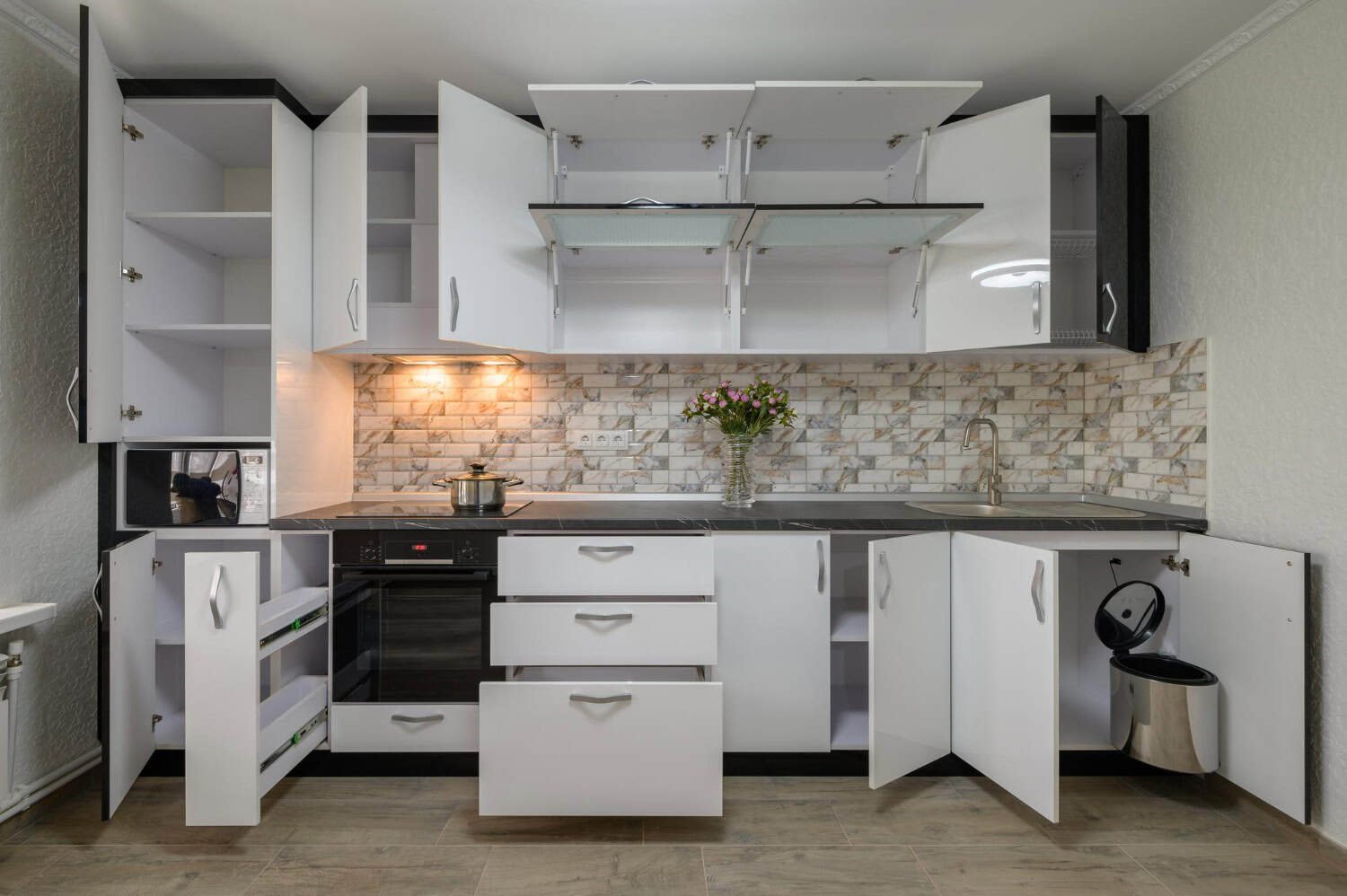
One of the greatest advantages of frameless cabinet construction is the ability to fully utilize the interior space with purpose-built organizational systems. Because there is no face frame reducing the drawer opening width, every Blum, Grass, or Hettich organizational accessory fits to the full interior dimension of the cabinet box. The practical difference this makes in a Peachtree Corners kitchen is substantial.
| Organizational Accessory | Description | Frameless Advantage |
| Blum LEGRABOX drawer | Full-extension, soft-close, 132 lb rated | Full interior width — no frame loss |
| Pullout pantry unit | Floor-to-ceiling vertical pullout | Full-depth, no frame obstruction |
| Corner magic corner | Diagonal corner pullout system | More storage in corner cabinets |
| Utensil insert | Custom-fit cutlery/utensil organizer | Sized to full drawer interior |
| Waste bin pull-out | Integrated dual-bin system | Smooth full-extension operation |
| Spice drawer insert | Tiered spice jar organizer | Fits full drawer width |
| Blum Revego pocket door | Appliance garage with folding doors | Frameless box accommodates mechanism |
| Gola Channel with LED | Handleless rail + integrated lighting | Frameless construction required |
Miramont Cabinetry’s design consultation process includes a complete interior organizational specification review — helping Peachtree Corners homeowners identify every pullout, insert, and accessory that will transform their new frameless cabinet system from simple storage into a precision-organized kitchen environment.
Frameless Cabinet Styles & Finish Options
A common misconception is that frameless cabinets only come in modern slab styles. In reality, frameless construction supports every aesthetic from minimalist European to warm transitional — the construction system is style-neutral. The door profile attached to the frameless box determines the aesthetic; the box itself simply delivers the engineering advantage.
| Door Style | Aesthetic Category | Finish Options | Best For |
| Slab / Flat-Front | Minimalist European | Matte, gloss, woodgrain, two-tone | Modern Peachtree Corners kitchens |
| Modern Shaker | Transitional | White, gray, blue, green | Mixed traditional/modern homes |
| Handleless Gola | Ultra-modern | Any slab finish + aluminum rail | High-end kitchens, open plans |
| High-Gloss Acrylic | Bold contemporary | White gloss, black gloss, colors | Urban condos, luxury renovations |
| Natural Woodgrain | Warm modern | Oak, walnut, smoked oak textures | Transitional warm contemporary |
| Two-Tone Slab | Contemporary statement | Contrast uppers & lowers | Master kitchens, large footprints |
Frameless Cabinet Hardware: Blum, Gola Channel & Beyond
Blum CLIP top BLUMOTION Hinge
The Blum CLIP top BLUMOTION concealed hinge is the industry standard for frameless cabinet performance. It offers 170-degree door opening, integrated soft-close dampening that cannot be defeated even by slamming, three-axis tool-free adjustment for perfect door alignment after installation, and a clip-on mounting plate that allows doors to be removed and reinstalled in seconds. Blum tests this hinge to over 200,000 open/close cycles — more than the lifetime of most kitchens. Every frameless cabinet system at Miramont Cabinetry uses Blum hinge systems as standard specification.
Blum LEGRABOX Drawer System
The LEGRABOX is Blum’s premium drawer system for frameless cabinetry — available in stainless steel and anthracite finishes, with a full-extension runner that supports up to 132 lbs of load and features BLUMOTION soft-close dampening that engages automatically at the last 30mm of closing travel. LEGRABOX drawers can be equipped with TIP-ON push-to-open function for handleless kitchen designs, and the ORGA-LINE insert system fits precisely within LEGRABOX interiors for fully organized drawer functionality. No other drawer system in the residential market matches LEGRABOX’s combination of load rating, finish quality, and organizational accessory integration.
Gola Channel Handleless System
The Gola Channel is an extruded aluminum profile system that runs along the top or bottom edge of frameless cabinet doors, functioning as a continuous grip rail that eliminates visible hardware entirely. Gola is available in aluminum, black, and white anodized finishes and can be integrated with LED strip lighting for ambient kitchen illumination along the door profile. It is one of the defining aesthetic signatures of German kitchen design and is available through Miramont Cabinetry for both kitchen and bathroom frameless cabinet projects in Peachtree Corners.
How to Evaluate Frameless Cabinet Quality Before You Buy
Not all frameless cabinets are equal. The market includes everything from premium European systems like Nobilia to cheap Asian imports marketed as ‘frameless’ that use thin panels, inferior edge banding, and budget hardware. Use this checklist when evaluating any frameless cabinet supplier in Peachtree Corners or the greater Atlanta area:
| Quality Indicator | What to Look For | Red Flag to Reject |
| Box panel thickness | 3/4″ (19mm) minimum | 1/2″ or thinner panels |
| Edge banding | Laser-bonded ABS, no glue line | Melamine tape that lifts at corners |
| Back panel | Fixed structural back, dadoed in | Thin stapled-on cardboard back |
| Hinge brand | Blum CLIP top or Hettich equivalent | Unbranded or plastic hinges |
| Drawer system | Blum LEGRABOX or Grass Vionaro | Plastic channel runners |
| Certification | KCMA documented certification | No certification, unverifiable claims |
| Finish test | Scratch, moisture, UV documented | Only visual sample available |
| Shelf pin system | Metal pin with clip, System 32 holes | Plastic pins, loose-fit holes |
| Corner joints | Dowel + glue + cam lock | Staple-only assembly |
| Interior coating | Melamine-lined, easy-clean surface | Raw particleboard interior |
Frameless Cabinets for Kitchens vs. Bathrooms
Frameless cabinet construction is equally appropriate for kitchen and bathroom applications, but the specification considerations differ between the two environments. Kitchens demand structural strength — base cabinets carry countertop loads, appliance weights, and daily abusive use. The frameless box construction handles this well, but box thickness and corner joint quality become particularly important. Look for 3/4-inch panels and mechanical corner joinery (dowel plus cam lock) rather than staple-only assembly.
Bathrooms present a moisture challenge that kitchens don’t: steam, standing water, and humidity fluctuations that attack wood-based panels at their edges. In bathroom applications, Miramont Cabinetry specifies moisture-resistant panel cores with sealed edges — critically important for frameless bathroom vanity boxes where the bottom panel may be exposed to water on the countertop or floor. Our bathroom frameless cabinets also use moisture-resistant finish systems on door interiors, where standard lacquer finishes can bubble and delaminate in high-humidity environments over time.
The organizational advantages of frameless construction apply equally in bathrooms: full-width drawers for toiletry organization, rollout shelves behind vanity doors, and pullout storage towers in tall cabinet units are all more functional in frameless construction than in face-framed bathroom cabinets. For Peachtree Corners master bathroom renovations — which often involve large double-vanity configurations — frameless construction is the preferred specification at Miramont Cabinetry.
Planning Your Frameless Cabinet Project in Peachtree Corners
A successful frameless cabinet project in Peachtree Corners begins with a detailed design consultation. Unlike stock cabinet purchases where you select from fixed sizes and standard configurations, custom frameless cabinetry is specified to your exact room dimensions, ceiling heights, window and door locations, appliance specifications, and lifestyle requirements. At Miramont Cabinetry, this process begins with a complimentary consultation at our Peachtree Industrial Blvd showroom — where our design team, including Nelly and Gulsah, guides you through every decision.
Our 3D VR design system allows you to walk through a virtual rendering of your planned frameless cabinet layout before any order is placed — seeing exactly how your chosen door styles, finishes, hardware, and organizational accessories will look in your actual kitchen or bathroom dimensions. This eliminates the guesswork and surprise that plagues many kitchen renovation projects and ensures that the finished installation matches your expectations precisely.
Once design is confirmed, Miramont Cabinetry manages the full production and delivery process, with custom frameless cabinet orders typically arriving at your Peachtree Corners home in approximately three weeks. Our installation team handles the precision leveling and alignment that frameless cabinet installation demands, ensuring that every door gap is consistent and every drawer operates with the smooth, soft-close performance that Blum hardware is engineered to deliver. Visit miramontcabinetry.com or call us at our Peachtree Corners showroom to begin your frameless cabinet project.
FAQ: Frameless Cabinets in Peachtree Corners, GA
1. Are frameless cabinets stronger than framed cabinets?
Frameless cabinets carry all structural loads through the cabinet box itself, which — when built from 3/4-inch HDP or plywood panels with proper corner joinery — is extremely strong. The face frame in traditional American cabinets does add some rigidity, but properly manufactured European frameless boxes are structurally equivalent or superior for virtually all residential kitchen and bathroom applications. Miramont Cabinetry’s KCMA-certified frameless line has passed independent structural testing to confirm performance under residential loading conditions.
2. Do frameless cabinets cost more than framed cabinets?
Quality European frameless cabinets — such as Nobilia-based systems from Miramont Cabinetry — cost more than budget framed imports but often compare favorably to high-end American custom framed cabinetry. The value proposition includes 15–20% more usable storage, significantly more durable hardware, better finish longevity, and aesthetics that hold resale value better in Peachtree Corners’ contemporary home market. Most homeowners who make the comparison conclude the investment is clearly justified.
3. Can frameless cabinets be installed in older Peachtree Corners homes?
Yes. Frameless cabinets can be installed in any structurally sound kitchen or bathroom space. They require more careful leveling during installation than framed systems — because there is no face frame to mask minor alignment issues — but any experienced installer who works with European frameless systems regularly can manage the requirements. Miramont Cabinetry manages the full installation process for Peachtree Corners clients.
4. What is the lead time for custom frameless cabinets in Peachtree Corners?
Miramont Cabinetry delivers custom frameless cabinet orders in approximately three weeks — significantly faster than typical custom cabinet lead times of 8–14 weeks in the Atlanta market. We recommend beginning the design process 4–6 weeks before your planned installation date to allow time for design finalization, order confirmation, and delivery logistics.
5. What is the difference between full-overlay and partial-overlay in frameless cabinets?
Full overlay means the door covers the entire visible cabinet face, leaving only a minimal reveal gap (typically 1/8 inch) between adjacent doors. This is the standard specification for European frameless cabinetry and delivers the seamless, integrated look characteristic of modern kitchen design. Partial overlay leaves more of the cabinet box visible between doors — less common in frameless systems and more associated with framed American cabinetry.
6. How do frameless cabinet hinges work?
Frameless cabinet hinges — specifically Blum’s CLIP top system — mount directly to the interior sidewall of the cabinet box using a mounting plate that is screwed to the box wall. The hinge arm clips onto this plate and holds the door in position. Three-axis adjustment screws allow the door position to be fine-tuned vertically, horizontally, and for depth after installation, without removing the door. This system is far more adjustable and field-serviceable than traditional American butt hinges.
7. Where can I see frameless cabinets in person near Peachtree Corners?
Miramont Cabinetry’s showroom on Peachtree Industrial Blvd in Peachtree Corners, GA displays a full selection of frameless cabinet configurations, including Nobilia kitchen systems, Gola Channel handleless designs, and modern frameless bathroom vanity installations. We also offer a 3D VR design consultation that allows you to visualize custom frameless cabinet layouts in your specific home dimensions.
8. What is KCMA certification and why does it matter?
KCMA (Kitchen Cabinet Manufacturers Association) certification means a cabinet product has passed independent third-party testing across five performance categories: structural load, door and drawer cycle testing, finish durability, and moisture resistance. It is the baseline quality assurance standard that distinguishes serious cabinet manufacturers from budget importers. All frameless cabinet systems supplied by Miramont Cabinetry are KCMA certified — and we can provide documentation on request.